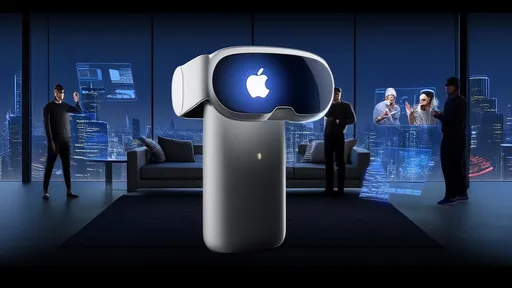
In a move that redefines the boundaries between physical and digital interaction, Apple has unveiled the Vision Pro 3, its most ambitious mixed reality headset to date. The standout feature revolutionizing how we connect? True holographic projection that transforms virtual meetings, gaming sessions, and casual hangouts into lifelike three-dimensional experiences. This isn't just another incremental update—it's Apple betting big on spatial computing as the next paradigm for human connection.
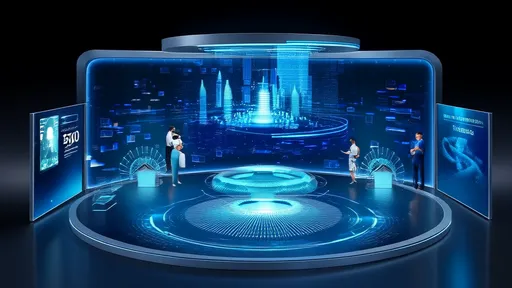
The Vision Pro 3's holographic capabilities stem from breakthroughs in micro-optics and spatial audio that previous generations couldn't achieve. What sets it apart isn't just the ability to project holograms, but how seamlessly these projections integrate with physical environments. Early testers describe the effect as "someone actually sitting across from you" rather than the floating ghost-like images of earlier holographic attempts. The system uses advanced lidar scanning to map rooms in real-time, allowing holograms to interact with furniture and physical objects convincingly.
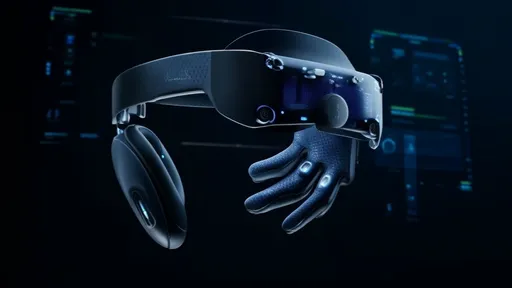
Social platforms are scrambling to adapt to this new dimension of interaction. Apple's proprietary ShareSpace app demonstrates the potential—users can collaboratively manipulate 3D models, watch holographic concerts where performers appear life-sized in their living rooms, or play chess with physical pieces that move autonomously based on remote players' actions. The tactile feedback system adds to the illusion, with haptic gloves (sold separately) providing the sensation of touching projected objects.
Privacy concerns haven't been overlooked in this always-on, environment-aware device. The Vision Pro 3 introduces OpticID, a security system that uses iris recognition for authentication while continuously verifying user identity. All environment scanning occurs locally, with Apple emphasizing that room maps and holographic interaction data never leave the device unless explicitly shared. This addresses growing unease about mixed reality devices capturing intimate home details.
The professional applications are equally transformative. Architects can walk clients through holographic building models at true scale, medical students can practice procedures on volumetric patient scans, and remote teams can collaborate on physical prototypes as if sharing the same workshop. Early enterprise partners like Siemens and Mayo Clinic have already begun developing custom solutions leveraging the hardware.
However, this technological leap comes with physical tradeoffs. The Vision Pro 3 remains noticeably heavier than conventional AR glasses, with most of its processing power housed in an external compute module worn on the hip. Battery life for intensive holographic use maxes out at 2.5 hours—a limitation Apple attributes to the "physics of light manipulation at this fidelity." The $3,499 starting price positions it firmly as a prosumer device, though analysts expect costs to decrease as the technology matures.
Cultural implications are already emerging. Social media influencers have begun experimenting with "hologram selfies," while dating apps explore compatibility matching through 3D avatars that capture mannerisms more authentically than flat profiles. Some sociologists warn of "holographic fatigue," where the brain struggles to disengage from hyper-realistic virtual interactions. Apple counters this with "Visual Calm" modes that subtly fade projections when users need breaks.
The development pipeline suggests this is just the beginning. Patent filings reveal work on holographic taste and smell simulation, while job listings hint at AI that can generate interactive holograms from verbal descriptions. As the Vision Pro 3 begins shipping next quarter, one thing is clear: the line between physical presence and digital connection has never been blurrier—or more exciting.
Competitors face an uphill battle matching Apple's holistic approach. While Meta focuses on metaverse avatars and Microsoft leans into productivity applications, Apple's tight integration of custom silicon, proprietary display tech, and iOS ecosystem creates a seamless experience third-party manufacturers can't easily replicate. The A17-powered "Reality Engine" chip handles holographic rendering with startling efficiency, avoiding the overheating issues plaguing some rival devices.
Content creators are equally crucial to this vision. Apple announced a $100 million developer fund specifically for holographic experiences, alongside new tools in Xcode that simplify converting existing 3D models into interactive projections. Major studios like Disney and NBA already have content in development, suggesting sports broadcasts and movie nights may soon become immersive holographic events.
Perhaps most intriguing is how the technology handles the "uncanny valley" problem that haunted earlier attempts at photorealistic holograms. Through a technique called Adaptive Light Matching, the Vision Pro 3 analyzes ambient lighting conditions hundreds of times per second, adjusting projections to blend naturally with their surroundings. The result avoids the eerie transparency or unnatural glow that made previous holograms feel unsettling.
Education represents another frontier. Imagine history lessons where students can walk around holographic recreations of ancient Rome or biology classes where 3D organs can be examined from every angle. Pilot programs with several universities are already testing these applications, with early data suggesting significant improvements in information retention compared to traditional methods.
The road ahead isn't without challenges. Regulatory bodies are still determining safety standards for prolonged holographic exposure, and some therapists express concerns about the psychological impact of "presence overload." Apple has convened an independent ethics board to study these effects, committing to adjust features based on their findings—a rare display of corporate caution in the typically cutthroat tech industry.
As the Vision Pro 3 prepares to ship, it's clear Apple isn't just selling a device but advocating for a new communication paradigm. In an era where Zoom fatigue has made flat screens feel inadequate and metaverse avatars seem impersonal, holographic socializing offers a compelling middle ground. Whether this becomes the next smartphone-level revolution or remains a niche pro tool depends on how quickly developers and society adapt to seeing eye-to-eye—literally—through light itself.

By /Aug 14, 2025

By /Aug 14, 2025

By /Aug 14, 2025

By /Aug 14, 2025

By /Aug 14, 2025
By /Aug 14, 2025

By /Aug 14, 2025
By /Aug 14, 2025

By /Aug 14, 2025

By /Aug 14, 2025

By /Aug 14, 2025
By /Aug 14, 2025

By /Aug 14, 2025

By /Aug 14, 2025

By /Aug 14, 2025

By /Aug 14, 2025
By /Aug 14, 2025

By /Aug 14, 2025

By /Aug 14, 2025