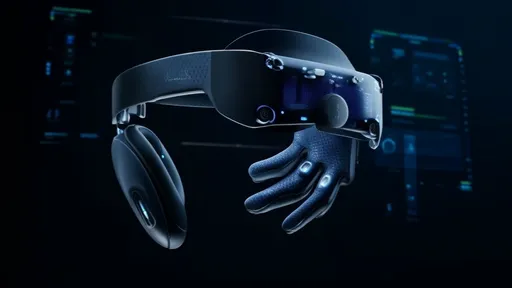
Meta has once again pushed the boundaries of virtual reality with the introduction of its groundbreaking haptic gloves, a wearable technology designed to simulate realistic touch sensations in VR environments. This innovation marks a significant leap forward in immersive experiences, allowing users to not only see and hear but also feel the digital world around them. The gloves, still in the research and development phase, could redefine how we interact with virtual spaces—from gaming and social interactions to professional training and remote collaboration.
The concept of haptic feedback isn’t new, but Meta’s approach distinguishes itself through its sophistication and potential for mass adoption. Traditional VR controllers rely on vibrations or resistance mechanisms to mimic touch, often falling short of delivering nuanced sensations. In contrast, Meta’s gloves employ a combination of soft robotics, microfluidic systems, and advanced pressure sensors to replicate the subtleties of human touch. For instance, wearers can sense the texture of a virtual object, the weight of a tool, or even the warmth of another person’s hand—a level of realism previously unattainable in consumer VR.
Behind the scenes, the technology is a marvel of engineering. The gloves use inflatable pads embedded in the fingertips, which expand or contract in response to virtual interactions. These pads are controlled by a microfluidic system that adjusts air pressure with precision, creating sensations ranging from a gentle brush to a firm grip. Meanwhile, motion-capture sensors track hand movements down to the smallest gestures, ensuring that the physical and virtual actions remain perfectly synchronized. The result is an eerily lifelike experience that blurs the line between the digital and physical worlds.
Meta’s ambitions for the haptic gloves extend far beyond gaming. The company envisions applications in fields like medicine, where surgeons could practice complex procedures in VR with tactile feedback, or in education, where students might dissect virtual specimens with the same dexterity as real ones. Remote work could also benefit, enabling colleagues to collaborate on 3D designs as if they were in the same room. Even social interactions in the metaverse could become more intimate, with handshakes, high-fives, or hugs carrying emotional weight through touch.
However, challenges remain before the gloves become a consumer reality. The current prototypes are tethered to external hardware, limiting mobility, and the cost of production is prohibitively high for most users. Meta’s researchers are also grappling with how to scale the technology—ensuring the gloves fit diverse hand sizes while maintaining sensitivity. Despite these hurdles, the progress is undeniable. Early testers describe the experience as "mind-blowing," with some reporting they forgot they were wearing gloves at all, so convincing were the sensations.
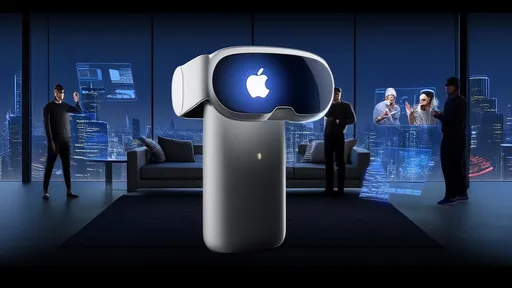
The introduction of haptic gloves underscores Meta’s commitment to building a metaverse that engages all five senses. While visual and auditory immersion have dominated VR thus far, touch has been the missing piece. By closing this gap, Meta is inching closer to its vision of a fully embodied internet—a space where digital interactions feel as real as face-to-face ones. Competitors like Apple and Valve are also exploring similar technologies, but Meta’s early investment in haptic research positions it as a frontrunner in this emerging field.
Looking ahead, the societal implications of tactile VR are profound. Ethical questions about privacy, consent, and the psychological effects of "virtual touch" will need addressing. For now, though, the focus remains on refining the technology. If successful, Meta’s haptic gloves could revolutionize not just entertainment but how we learn, work, and connect in an increasingly digital world. One thing is certain: the future of VR will be felt, not just seen.

By /Aug 14, 2025

By /Aug 14, 2025

By /Aug 14, 2025

By /Aug 14, 2025

By /Aug 14, 2025

By /Aug 14, 2025

By /Aug 14, 2025
By /Aug 14, 2025

By /Aug 14, 2025

By /Aug 14, 2025

By /Aug 14, 2025
By /Aug 14, 2025

By /Aug 14, 2025

By /Aug 14, 2025

By /Aug 14, 2025

By /Aug 14, 2025

By /Aug 14, 2025

By /Aug 14, 2025

By /Aug 14, 2025