Belarusian Potash Fertilizer Exports Shift to Asian Markets, Exports to India Increase by 50%

Nov 5, 2025 By

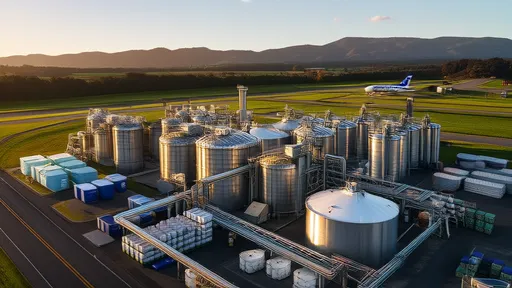
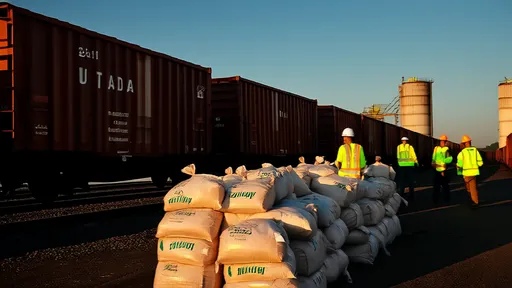
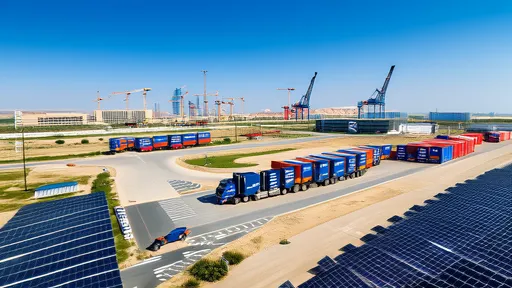
Belarusian Potash Company has dramatically shifted its export strategy in recent months, redirecting massive shipments toward Asian markets as traditional European customers dwindle. The geopolitical reconfiguration of global fertilizer trade routes represents one of the most significant commodity flow transformations since the implementation of Western sanctions against Belarus. Industry analysts confirm that India has emerged as the primary beneficiary of this strategic pivot, with imports of Belarusian potash surging by approximately 50% during the last quarter alone.


The redirection comes as European nations systematically reduce dependency on Belarusian fertilizers following political tensions and international sanctions. This strategic decoupling has forced the world's second-largest potash producer to identify and cultivate alternative markets rapidly. Asian nations, particularly India with its enormous agricultural sector and growing population, presented the most logical destination for these displaced shipments. The timing coincided perfectly with India's own efforts to diversify fertilizer imports and secure stable supplies amid global market volatility.


Market intelligence reveals that Indian importers have capitalized on favorable pricing conditions resulting from Belarus's urgent need to place substantial volumes previously destined for European markets. The competitive pricing advantage has enabled Indian agricultural distributors to stockpile inventories ahead of the crucial planting seasons. This strategic procurement has provided Indian farmers with more affordable fertilizer options compared to previous years when they relied more heavily on Canadian and Russian suppliers.


Shipping logistics have undergone remarkable transformation to accommodate this eastward shift. Specialized bulk carriers that traditionally transported potash to European ports like Klaipėda and Riga are now navigating longer routes to Indian ports including Kandla, Mundra, and Visakhapatnam. The extended transit times have necessitated adjustments in supply chain planning, with both exporters and importers building additional buffer stocks to account for longer lead times. Maritime industry sources indicate that charter rates for vessels serving the Belarus-India potash route have increased by nearly 30% due to heightened demand.


The quality of Belarusian potash has received positive feedback from Indian agricultural experts and farmers. The potassium chloride content consistently meets international standards, and the granular structure proves ideal for various Indian soil conditions and cropping patterns. Field trials conducted across multiple states have demonstrated effectiveness comparable to premium Canadian products but at significantly lower cost. This quality-to-price ratio has accelerated adoption rates among price-sensitive Indian farmers.


Trade financing mechanisms have evolved to circumvent restrictions imposed by some international banking institutions. Alternative payment channels using currencies like the UAE dirham and Russian ruble have facilitated transactions that might otherwise face complications through traditional dollar-denominated systems. Indian importers have shown remarkable adaptability in navigating these new financial pathways, often working through intermediary financial hubs in the Middle East and Southeast Asia.


Belarus's production infrastructure has demonstrated impressive flexibility in recalibrating output specifications to meet Asian market preferences. While European customers typically demanded specific granule sizes and coating formulations, Indian agricultural requirements differ substantially. Belarusian producers have rapidly adjusted manufacturing processes to accommodate these variations, showcasing the industry's technical capability to serve diverse global markets simultaneously.


The environmental implications of extended shipping routes deserve consideration. The carbon footprint of transporting potash from Belarusian production facilities to Indian ports exceeds previous European routes by approximately 40% in terms of maritime emissions. However, industry representatives highlight that modern bulk carriers have significantly improved fuel efficiency compared to older vessels, partially mitigating the environmental impact of these longer journeys.


Market analysts project that this trade reorientation may become permanent even if political relationships with Europe normalize. The established supply chains and commercial relationships between Belarusian producers and Indian distributors have developed substantial momentum that may prove economically efficient to maintain. The demonstrated reliability of Belarusian supplies during periods of global uncertainty has built trust among Indian agricultural stakeholders.


The Indian government's fertilizer subsidy program has indirectly supported this trade shift by ensuring timely payments to importers despite the complexities of international financial restrictions. By guaranteeing domestic distribution channels, the subsidy system has provided Belarusian exporters with confidence in payment security, a crucial factor in maintaining consistent shipments during the market transition period.


Competitor reactions have been mixed as global potash producers adjust to the new market dynamics. Canadian producers, traditionally dominant in Asian markets, have implemented strategic pricing adjustments to maintain market share. Russian exporters, facing their own geopolitical challenges, have intensified competition in price-sensitive Asian markets. This competitive environment has ultimately benefited major importers like India through improved bargaining power and diversified supply options.


Looking forward, industry experts anticipate further consolidation of the Belarus-India fertilizer trade relationship. Long-term contracts currently under negotiation suggest both parties recognize the mutual benefits of stable, predictable trade flows. Indian agricultural authorities have indicated satisfaction with both the quality and reliability of Belarusian supplies, suggesting this partnership will likely expand to include other fertilizer products beyond potash.


The successful redirection of Belarusian potash exports to Asian markets represents a case study in global commodity trade adaptation under geopolitical pressure. It demonstrates how established producers can rapidly identify and develop alternative markets when traditional trading relationships become constrained. For India, the increased access to affordable fertilizer supports agricultural productivity and food security objectives at a time when global food prices remain volatile.


As harvest seasons progress across India, the true impact of this fertilizer supply shift will become measurable through crop yields and farmer profitability assessments. Early indications from agricultural extension services suggest positive outcomes, particularly for cash crops where potassium availability significantly influences both quantity and quality of production. The coming months will provide more comprehensive data to evaluate the sustainability of this reconfigured global fertilizer supply chain.



Recommend Posts
Business

Ukraine's Agricultural Technology Develops Rapidly, Precision Agriculture Technology Popularity Increases

By /Nov 5, 2025

Ukraine's agricultural landscape is undergoing a profound transformation, marked by the rapid adoption of precision farming technologies. This evolution is not merely a trend but a necessary pivot, driven by the dual pressures of global food demand and the need for sustainable resource management. The country's vast, fertile plains, historically known as the breadbasket of Europe, are now becoming a testing ground for some of the most advanced agricultural technologies in the world.
Business

Greek Shipping Industry Embraces Green Transition with Orders for Multiple LNG-Powered Cargo Ships

By /Nov 5, 2025

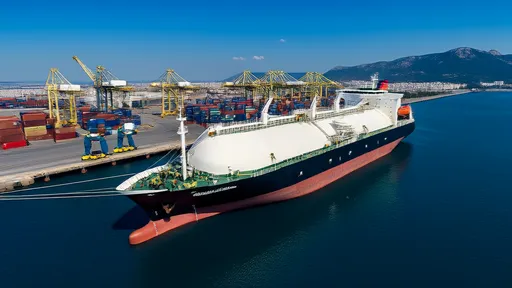
Greek shipping magnates are making waves in the maritime industry with a strategic pivot toward liquefied natural gas-powered cargo vessels, marking one of the most significant fleet modernization initiatives in recent maritime history. Against the backdrop of mounting environmental regulations and shifting global energy dynamics, Greece's legendary shipowners are deploying their characteristic long-term vision to future-proof their operations. This calculated transition represents more than mere compliance—it's a fundamental reimagining of maritime transportation that could redefine global shipping standards for decades to come.
Business

Qatar Energy and Total Sign $27 Billion LNG Project

By /Nov 5, 2025

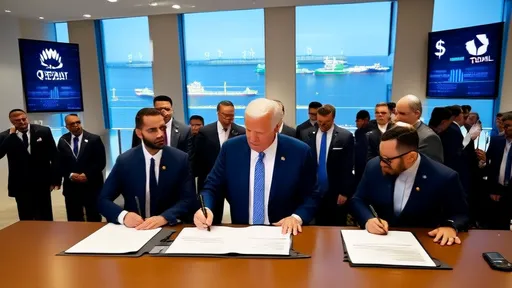
In a monumental move that reshapes global energy dynamics, QatarEnergy has sealed a historic $27 billion partnership with French energy giant TotalEnergies to develop the North Field East LNG project. The agreement, signed in Doha's glittering diplomatic quarter, represents the single largest investment in Qatar's liquefied natural gas history and signals a strategic shift in Europe's energy security landscape following geopolitical tensions that have disrupted traditional gas supplies.
Business

Czech Republic's Industrial Robot Density Leaps into the Global Top Five, Accelerating Automation Process

By /Nov 5, 2025

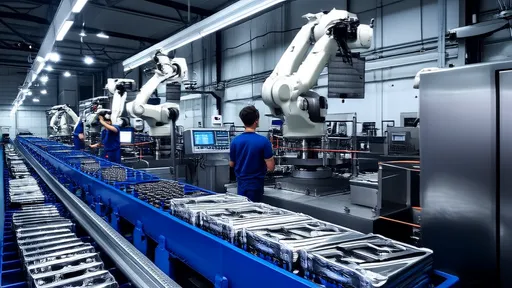
The clatter of machinery echoes through Czech factories with renewed intensity these days, but it's a sound less of human labor and more of automated precision. In a remarkable economic shift, the Czech Republic has catapulted itself into the global top five for industrial robot density, a metric that measures the number of robotic units per 10,000 human employees in the manufacturing sector. This isn't merely a statistical achievement; it's the culmination of a strategic, multi-faceted transformation that is fundamentally reshaping the nation's industrial landscape and its position in the global supply chain.
Business

Finnish Cleantech Companies Receive Key Support from EU Green Transition Fund

By /Nov 5, 2025

In a significant move towards accelerating Europe's green transition, Finnish clean technology companies have emerged as major beneficiaries of the European Union's substantial funding initiatives. The Nordic nation, long recognized for its environmental innovation, is positioning itself at the forefront of the continent's sustainable transformation, with its specialized enterprises securing pivotal financial backing from Brussels.
Business

Cambodia's Rice Exports Implement Brand Strategy, Prices Increase by 20%

By /Nov 5, 2025

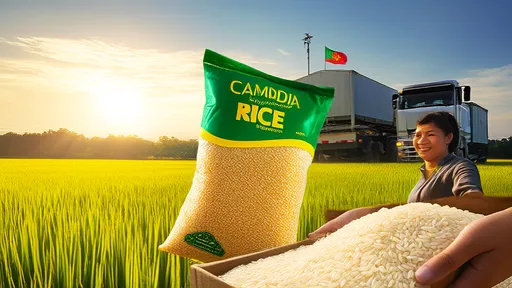
In the lush, rain-fed paddies of Cambodia, a quiet revolution is taking root. For generations, Cambodian farmers have cultivated some of the world's most aromatic and sought-after rice varieties, yet the financial rewards have often failed to reflect this quality. Competing in a crowded global market primarily on price, the nation's rice sector found itself vulnerable to volatile commodity swings. This narrative, however, is undergoing a profound shift. The Cambodian government, in a strategic partnership with the private sector, has embarked on an ambitious national branding initiative. The early results are staggering: a concerted push towards premium positioning has led to an average price increase of twenty percent for its exported rice, signaling a new chapter for this cornerstone of the Cambodian economy.
Business

Myanmar Rubber Export Prices Soar Amid Global Supply Chain Adjustments

By /Nov 5, 2025

Myanmar's rubber industry is experiencing an unprecedented boom as export prices surge to record highs, riding the wave of global supply chain realignments that have reshaped international trade patterns. The Southeast Asian nation, long overshadowed by regional rubber giants, is suddenly finding itself at the center of global attention as manufacturers worldwide scramble to secure alternative rubber sources.
Business

Kazakhstan's Central Asia Financial Hub Accelerates, Attracting International Banks to Set Up Shop

By /Nov 5, 2025

Kazakhstan's ambitious vision to transform into Central Asia's premier financial hub is gaining remarkable momentum as international banking giants increasingly establish their presence in the country. The strategic initiative, years in the making, is now showing tangible results that signal a significant shift in the regional financial landscape.
Business

Morocco's Auto Parts Industry Rises to Become Europe's Second Largest Supplier

By /Nov 5, 2025

Morocco's automotive components industry has quietly transformed into Europe's second-largest supplier, marking one of the most remarkable industrial success stories of the past decade. What began as a modest manufacturing hub has evolved into a sophisticated ecosystem capable of competing with established European players. The North African kingdom now supplies major automotive brands across the continent, with its strategic positioning and competitive advantages creating an undeniable appeal for global manufacturers seeking reliable, cost-effective production partners.
Business

Kenya Leads Africa in Mobile Money Transactions, Exceeding $5 Billion Monthly

By /Nov 5, 2025

In the bustling markets of Nairobi, a quiet revolution has been unfolding for over a decade. Street vendors, taxi drivers, and small business owners conduct transactions not with crumpled banknotes, but with the tap of a mobile phone. Kenya has firmly established itself as Africa's undisputed leader in mobile money, with monthly transaction volumes consistently surpassing the $5 billion mark, creating an economic ecosystem that has become the envy of developing nations worldwide.
Business

Nigerian Digital Bank Kuda Secures $200 Million in New Funding Round

By /Nov 5, 2025

In a move that signals continued investor confidence in Africa's burgeoning fintech landscape, Nigerian digital bank Kuda has secured a monumental $200 million funding round that places the company among the continent's most valuable financial technology startups. The Series B investment, led by new backer Tiger Global Management with participation from existing investors, catapults Kuda's valuation to approximately $500 million just two years after its commercial launch, underscoring the rapid transformation occurring within Nigeria's financial services sector.
Business

New Zealand Dairy Exports Transform, High-Value Products Account for Over 60%

By /Nov 5, 2025

New Zealand's dairy industry, long synonymous with bulk commodity exports, is undergoing a profound transformation. The familiar image of milk powder being shipped in vast quantities is rapidly giving way to a more sophisticated narrative, one defined by innovation, specialized nutrition, and strategic market positioning. The most telling indicator of this shift is the sector's pivot towards high-value products, which now constitute over 60% of its export earnings. This is not a minor adjustment but a fundamental reimagining of New Zealand's role in the global food chain, moving from a volume-based supplier to a value-driven partner in health and wellness.
Business

Ethiopian Industrial Parks Attract Large-Scale Transfer of Chinese Textile Enterprises

By /Nov 5, 2025

Ethiopia's industrial parks are quietly emerging as the new frontier for global textile manufacturing, with Chinese companies leading a remarkable wave of investment that could reshape Africa's economic landscape. The transformation is happening at a pace that has surprised even the most seasoned industry observers, creating what many are calling the most significant shift in global textile production since China's own manufacturing boom decades ago.
Business

Belarusian Potash Fertilizer Exports Shift to Asian Markets, Exports to India Increase by 50%

By /Nov 5, 2025

Belarusian Potash Company has dramatically shifted its export strategy in recent months, redirecting massive shipments toward Asian markets as traditional European customers dwindle. The geopolitical reconfiguration of global fertilizer trade routes represents one of the most significant commodity flow transformations since the implementation of Western sanctions against Belarus. Industry analysts confirm that India has emerged as the primary beneficiary of this strategic pivot, with imports of Belarusian potash surging by approximately 50% during the last quarter alone.
Business

Swedish Battery Manufacturer Northvolt Completes Europe's Largest Battery Factory

By /Nov 5, 2025

In the quiet Swedish town of Skellefteå, just 200 kilometers south of the Arctic Circle, a quiet revolution is taking place that could reshape Europe's industrial future. Northvolt, the continent's most ambitious battery startup, has officially inaugurated what industry analysts are calling Europe's largest battery factory—a sprawling complex that represents not just a manufacturing facility, but a statement of intent in the global race for clean energy technology.
Business

Peru's Blueberry Exports Surpass Grapes to Become the Top Fruit Export Category

By /Nov 5, 2025

Peru's agricultural landscape has witnessed a remarkable shift in recent years, with blueberries emerging as the country's leading fruit export, surpassing the long-dominant grape sector. This development marks a significant milestone in Peru's economic transformation and highlights the nation's growing influence in global fruit markets.
Business

UAE Sovereign Wealth Fund Increases Technology Investment in the Asia-Pacific Region

By /Nov 5, 2025

The Abu Dhabi Investment Authority, one of the world's largest sovereign wealth funds, is quietly executing a strategic pivot toward Asia-Pacific technology sectors that could reshape global investment patterns for years to come. With over $800 billion in assets under management, ADIA's recent moves signal a fundamental reallocation of capital that reflects both changing global economic dynamics and the fund's long-term vision for technological transformation.
Business

Oman's Duqm Special Economic Zone Welcomes First Batch of Chinese Enterprises

By /Nov 5, 2025

The winds of economic transformation are sweeping across the Omani desert as the Duqm Special Economic Zone (SEZ) marks a significant milestone with the arrival of its first wave of Chinese corporate pioneers. This development, far from being a mere transactional entry, represents the tangible fruition of years of strategic planning and high-level diplomacy between the Sultanate of Oman and the People's Republic of China, firmly anchoring Duqm's position within the ambitious framework of the Belt and Road Initiative (BRI).
Business

Sri Lankan Tea Exports Reach New High, Targeting China's High-End Market

By /Nov 5, 2025

Sri Lanka's tea industry is experiencing a remarkable renaissance, with export figures reaching unprecedented heights as the island nation strategically pivots toward China's burgeoning premium market. The aromatic Ceylon tea, long celebrated for its distinctive character and quality, is now finding enthusiastic reception among China's growing middle and upper classes who increasingly value authenticity, provenance, and premium experiences.