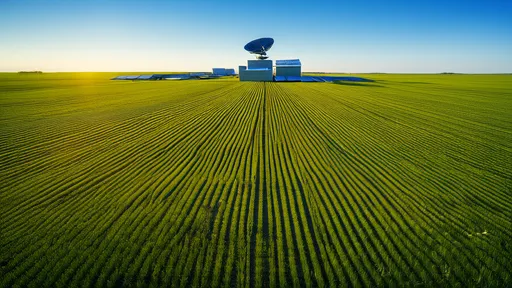
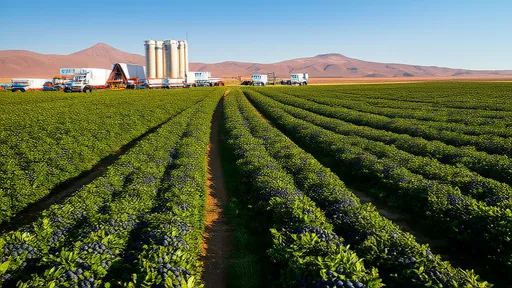
Ukraine's agricultural landscape is undergoing a profound transformation, marked by the rapid adoption of precision farming technologies. This evolution is not merely a trend but a necessary pivot, driven by the dual pressures of global food demand and the need for sustainable resource management. The country's vast, fertile plains, historically known as the breadbasket of Europe, are now becoming a testing ground for some of the most advanced agricultural technologies in the world.
The journey towards technological integration in Ukrainian agriculture began in earnest over the past decade. Initially, the adoption was slow, hampered by traditional farming practices and limited access to capital. However, a confluence of factors has dramatically accelerated this process. The growing availability of localized data, decreasing costs of technology, and an increasing number of success stories from pioneering farms have created a powerful momentum for change. Farmers are no longer viewing technology as a luxury but as an essential tool for survival and growth in a competitive global market.
At the heart of this revolution is the widespread implementation of GPS and GIS technologies. These systems form the backbone of precision agriculture, allowing for unprecedented levels of field management. Tractors and combines equipped with auto-steer systems can now navigate fields with centimeter-level accuracy, minimizing overlaps and gaps during planting, fertilizing, and harvesting. This not only saves significant amounts of fuel, seeds, and fertilizers but also reduces soil compaction by ensuring machinery follows the same tracks. The result is a direct boost to the bottom line through input savings and a long-term improvement in soil health.
The use of satellite and drone imagery has become another cornerstone of modern Ukrainian farming. Multispectral and hyperspectral sensors capture data that is invisible to the naked eye, revealing variations in crop health, moisture stress, and nutrient deficiencies long before they become apparent through traditional scouting. This early-warning system enables farmers to take targeted, corrective actions rather than applying blanket treatments across entire fields. For instance, if a specific area of a field shows signs of nitrogen deficiency, a variable rate application (VRA) system can apply the exact amount of fertilizer needed only in that zone, preventing waste and environmental runoff.
Soil sensing technology has also seen a significant uptick in adoption. Mobile sensors and detailed soil mapping provide a deep understanding of the spatial variability within a single field. Farmers can now create management zones based on soil type, organic matter content, and topography. This allows for the customization of seeding rates and planting depths to match the potential of each specific zone. A less productive, sandy area might receive fewer seeds, while a rich, loamy section is planted more densely, thereby optimizing the use of every single seed and maximizing overall yield potential.
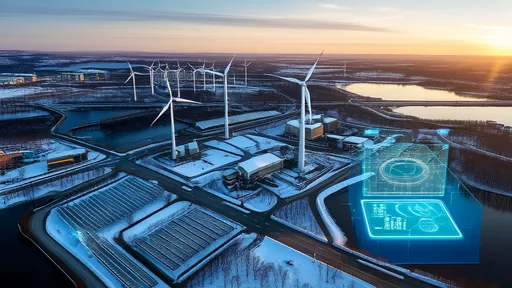
The data generated by these technologies is immense, and its power is unlocked through sophisticated farm management software platforms. These digital platforms act as a central nervous system for the farm, integrating data from machinery, satellites, drones, and soil sensors. They transform raw data into actionable insights, providing farmers with dashboards that display field health, progress of operations, and historical performance. This data-driven approach facilitates better decision-making, from planning the next season's crop rotation based on past yield maps to scheduling irrigation based on real-time evapotranspiration data.
The driver behind this rapid technological uptake is a powerful combination of economic necessity and growing support structures. Facing volatile global commodity prices and rising input costs, Ukrainian farmers are under constant pressure to improve efficiency. Precision agriculture offers a clear path to reducing costs per unit of production. Furthermore, a burgeoning ecosystem of local ag-tech startups and the increased presence of international agricultural machinery giants have made these technologies more accessible and better supported than ever before.
Government policies and international development projects have also played a catalytic role. Initiatives aimed at modernizing the agricultural sector, along with grants and soft loans for technology investment, have lowered the financial barrier for many medium-sized farms. This support has been crucial in democratizing access to technology, ensuring that the benefits of precision agriculture are not confined solely to large agri-holdings but are trickling down to family-run farms as well.
The impact of this technological shift extends far beyond the farm gate. By optimizing the use of inputs like fertilizers and pesticides, precision farming is contributing to a significant reduction in agriculture's environmental footprint. Less chemical runoff means healthier waterways and ecosystems. Improved soil management practices enhance carbon sequestration, positioning Ukrainian agriculture as a potential player in climate change mitigation. This alignment of economic incentive with environmental stewardship is a key characteristic of the country's new agricultural identity.
Looking ahead, the momentum shows no signs of slowing. The next frontier involves the integration of artificial intelligence and machine learning. AI-powered algorithms are beginning to predict pest outbreaks, recommend hybrid selections for specific field zones, and even automate complex decision-making processes. The advent of 5G connectivity in rural areas promises to make real-time data transfer and the Internet of Things (IoT) a practical reality on a massive scale, with sensors on every piece of equipment and in the soil providing a constant stream of information.
In conclusion, Ukraine's embrace of precision agriculture is a compelling story of transformation. It is a move away from blanket, intuition-based farming towards a nuanced, data-driven model that respects the variability of the land. This is not just about keeping pace with global trends; it is about securing a sustainable, productive, and profitable future for one of the world's most critical agricultural regions. The fields of Ukraine are becoming smarter, and in doing so, they are ensuring that the nation's agricultural legacy continues to thrive in the 21st century.
By /Nov 5, 2025
By /Nov 5, 2025

By /Nov 5, 2025
By /Nov 5, 2025
By /Nov 5, 2025
By /Nov 5, 2025

By /Nov 5, 2025

By /Nov 5, 2025
By /Nov 5, 2025

By /Nov 5, 2025

By /Nov 5, 2025
By /Nov 5, 2025
By /Nov 5, 2025
By /Nov 5, 2025
By /Nov 5, 2025
By /Nov 5, 2025

By /Nov 5, 2025
By /Nov 5, 2025

By /Nov 5, 2025