In the lush, rain-fed paddies of Cambodia, a quiet revolution is taking root. For generations, Cambodian farmers have cultivated some of the world's most aromatic and sought-after rice varieties, yet the financial rewards have often failed to reflect this quality. Competing in a crowded global market primarily on price, the nation's rice sector found itself vulnerable to volatile commodity swings. This narrative, however, is undergoing a profound shift. The Cambodian government, in a strategic partnership with the private sector, has embarked on an ambitious national branding initiative. The early results are staggering: a concerted push towards premium positioning has led to an average price increase of twenty percent for its exported rice, signaling a new chapter for this cornerstone of the Cambodian economy.
The genesis of this transformation lies in a stark realization. While Cambodia's rice, particularly its fragrant Phka Rumduol and Phka Romdeng jasmine varieties, was consistently winning international taste awards, it was often being sold in bulk, unbranded, and blended with rice from other countries. The unique identity and superior quality were being lost, and with it, the potential for higher profit margins. The value was being captured by middlemen and international packers, not the farmers who poured their labor into the land. This scenario prompted a strategic pivot from a volume-based export model to a value-driven one. The core of this new strategy is brand building—creating a distinct, recognizable, and trusted identity for Cambodian rice on the world stage.
The implementation of this branding strategy has been multifaceted, targeting every link in the supply chain. At the farm level, there has been a renewed emphasis on quality control and certification. Programs promoting Good Agricultural Practices (GAP) have been expanded, ensuring that the rice is grown with sustainable methods, traceable from paddy to port. This focus on provenance is a critical component of the brand's story. Consumers in premium markets, particularly in Europe and China, are increasingly conscious of the origin, ethical production, and environmental footprint of their food. By certifying and promoting these standards, Cambodia is not just selling rice; it is selling trust, sustainability, and a connection to a specific, unspoiled terroir.
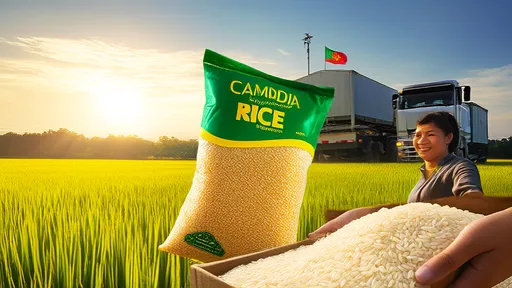
Beyond the fields, the branding effort has concentrated on creating a unified market presence. Instead of a multitude of small exporters competing against each other, there is now a coordinated effort under the banner of "Cambodia Rice." This umbrella brand is promoted at international food fairs and trade missions, highlighting the grain's unique qualities—its distinctive fragrance, soft texture, and excellent elongation after cooking. The packaging itself has been revolutionized. Gone are the anonymous, plain sacks. Today, Cambodian rice is increasingly exported in branded, consumer-ready packaging that clearly states its origin and quality certifications, making it instantly recognizable on supermarket shelves from Paris to Shanghai.
The impact of this strategic shift is now being felt in the most crucial metric: price. The twenty percent increase is not a random spike but a direct reflection of the perceived value that branding imparts. Importers and consumers are demonstrating a willingness to pay a premium for a product with a guaranteed origin, a compelling story, and certified quality. This price uplift has a cascading effect throughout the domestic economy. For the first time in many years, rice farmers are seeing a tangible and significant improvement in their incomes. This newfound prosperity empowers them to reinvest in their farms, adopt better technologies, and plan for the future with greater confidence, creating a virtuous cycle of investment and quality improvement.
Furthermore, this success has strengthened Cambodia's position in key export markets. The European Union, with its Everything But Arms (EBA) trade scheme, has long been a critical destination. The branding strategy has allowed Cambodian exporters to move beyond simply benefiting from tariff-free access and to start building brand loyalty. Similarly, in the competitive Chinese market, Cambodian rice is now being positioned as a high-quality, gourmet option, distinguishing it from mass-produced alternatives. This strategic market positioning insulates the sector to some degree from the fierce price competition that characterizes the global rice trade, building a more resilient and sustainable export industry.
Of course, the journey is far from over. Challenges such as maintaining consistent quality across a vast and decentralized farming community, improving logistical infrastructure to reduce post-harvest losses, and fending off competitors who may attempt to mimic the branding strategy remain. However, the initial success of the price increase has provided a powerful validation of the chosen path. It has proven that by believing in the intrinsic quality of its product and investing in its story, Cambodia can command the respect and the prices it deserves in the global marketplace.
In conclusion, the story of Cambodian rice is evolving from a tale of agricultural potential to one of branded excellence. The twenty percent price increase is more than just a financial statistic; it is a symbol of a nation successfully leveraging its cultural and agricultural heritage to create economic value. This strategic rebranding has transformed a commodity into a coveted product, ensuring that the rewards of Cambodia's fertile lands and hardworking farmers are finally being reaped where they are most deserved. The future of Cambodian rice now looks not only more fragrant but also far more prosperous.

By /Nov 5, 2025

By /Nov 5, 2025
By /Nov 5, 2025

By /Nov 5, 2025

By /Nov 5, 2025
By /Nov 5, 2025

By /Nov 5, 2025

By /Nov 5, 2025

By /Nov 5, 2025
By /Nov 5, 2025

By /Nov 5, 2025

By /Nov 5, 2025

By /Nov 5, 2025

By /Nov 5, 2025

By /Nov 5, 2025
By /Nov 5, 2025

By /Nov 5, 2025

By /Nov 5, 2025
By /Nov 5, 2025