Swedish Battery Manufacturer Northvolt Completes Europe's Largest Battery Factory

Nov 5, 2025 By

In the quiet Swedish town of Skellefteå, just 200 kilometers south of the Arctic Circle, a quiet revolution is taking place that could reshape Europe's industrial future. Northvolt, the continent's most ambitious battery startup, has officially inaugurated what industry analysts are calling Europe's largest battery factory—a sprawling complex that represents not just a manufacturing facility, but a statement of intent in the global race for clean energy technology.


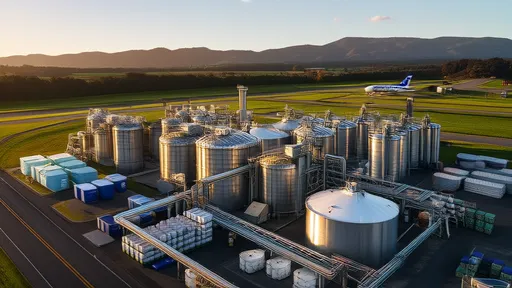
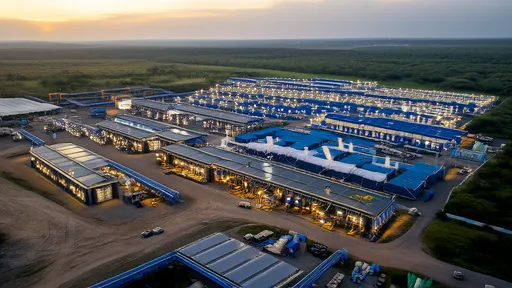
The Northvolt Ett facility, whose name simply means "Northvolt One" in Swedish, stands as a testament to European determination in the face of Asian dominance in battery manufacturing. With its gleaming production halls stretching across an area equivalent to 70 football fields, the factory represents more than just physical infrastructure—it embodies Europe's strategic pivot toward energy independence and technological sovereignty. The scale of the operation becomes apparent when considering that the facility's annual production capacity could eventually power over one million electric vehicles, fundamentally altering the automotive landscape across the continent.


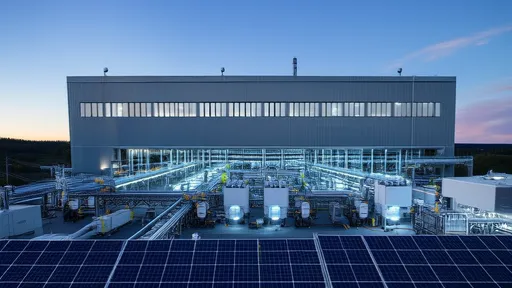
What makes Northvolt's achievement particularly remarkable is the timeline and context of its development. Founded in 2016 by two former Tesla executives, Peter Carlsson and Paolo Cerruti, the company has moved from PowerPoint presentation to industrial behemoth in just five years—a pace that defies conventional wisdom in capital-intensive manufacturing. The factory's location in northern Sweden, while seemingly counterintuitive, leverages the region's abundant renewable energy resources, with approximately 95% of the facility's power coming from hydroelectric and wind sources. This positions Northvolt as not just a battery manufacturer, but as a pioneer in genuinely sustainable industrial production.


The significance of Northvolt Ett extends far beyond its production statistics. European Commission officials have privately described the facility as a cornerstone of the European Green Deal and the bloc's broader industrial strategy. With the European Union planning to phase out combustion engine vehicles by 2035, the availability of locally produced, sustainable batteries has become a matter of economic security. The factory represents Europe's answer to what policymakers have termed "the battery gap"—the concerning dependency on Asian manufacturers for the crucial technology that will power the continent's clean transportation future.


Production at Northvolt Ett represents a departure from conventional battery manufacturing in several key aspects. The company has developed what it calls a "prismatic cell" design that offers higher energy density and improved safety characteristics compared to traditional formats. More importantly, Northvolt has placed circular economy principles at the heart of its manufacturing process. The company has committed to using 50% recycled material in all new battery cells by 2030, with an on-site recycling facility capable of recovering up to 95% of valuable metals like nickel, cobalt, and manganese from used batteries.


The human dimension of the Northvolt story is equally compelling. In a region historically dependent on mining and forestry, the battery factory has created approximately 3,000 direct jobs, with thousands more expected in the supply chain and supporting industries. The workforce represents a fascinating mix of local hires retrained from traditional industries and international experts drawn from across Europe and beyond. This fusion of local knowledge and global expertise has created what plant managers describe as a unique manufacturing culture—one that combines Swedish precision with startup innovation.


Technical innovation at the facility extends beyond the battery cells themselves. The manufacturing process incorporates artificial intelligence and machine learning systems that continuously optimize production parameters, improving yield and quality with each production cycle. Sophisticated battery management systems developed in-house allow for real-time monitoring of cell health and performance, providing valuable data that feeds back into the research and development process. This closed-loop approach to manufacturing intelligence represents what industry observers believe could become the new standard in advanced industrial production.


Supply chain considerations have been central to Northvolt's strategy from the beginning. The company has secured long-term agreements with Swedish mining companies for responsibly sourced raw materials, reducing dependency on potentially unstable international supply chains. This vertical integration extends to precursor materials, with Northvolt developing proprietary methods for producing cathode active materials—the most valuable components in lithium-ion batteries. This control over the entire production process, from raw materials to finished cells, provides Northvolt with significant competitive advantages in both cost and quality control.


The customer portfolio that Northvolt has assembled reads like a who's who of European automotive manufacturing. The company has secured $55 billion worth of contracts from manufacturers including BMW, Volkswagen, Volvo, and Polestar. These aren't merely supply agreements but deep technical partnerships that involve co-development of battery systems tailored to specific vehicle platforms. The collaborative nature of these relationships represents a shift from the transactional supplier relationships that have traditionally characterized the automotive industry.


Financing the Northvolt vision required unprecedented coordination between public and private capital. The company has raised over $6.5 billion in equity funding from investors including Goldman Sachs, Volkswagen, and BMW, alongside billions more in debt financing from European investment banks. Perhaps more significantly, Northvolt secured a $400 million investment from the European Union through the European Investment Bank—marking one of the largest direct investments the bloc has ever made in a private company. This level of support underscores the strategic importance European institutions have placed on developing indigenous battery manufacturing capability.


Environmental considerations have been integral to the factory's design and operation. Beyond its use of renewable energy, the facility incorporates sophisticated water recycling systems that reduce consumption by over 70% compared to conventional battery factories. The manufacturing process has been engineered to minimize solvent use and emissions, with advanced filtration systems ensuring that air and water leaving the facility are cleaner than when they entered. These environmental standards aren't merely regulatory compliance exercises but reflect Northvolt's fundamental business philosophy—that sustainable manufacturing can be commercially competitive.


The research and development activities at Northvolt extend well beyond current production needs. The company operates Northvolt Labs, a separate facility dedicated to next-generation battery technologies, including solid-state batteries and sodium-ion chemistry that could eventually reduce or eliminate dependency on scarce materials like cobalt. This forward-looking research program has attracted some of the world's leading battery scientists, creating what many describe as Europe's most concentrated pool of energy storage expertise.


Looking toward the future, Northvolt has already announced plans for additional gigafactories across Europe, with facilities planned in Germany and potentially elsewhere on the continent. The company's ambitious roadmap calls for 150 GWh of annual production capacity by 2030—enough to power approximately two million electric vehicles per year. This expansion would represent approximately 20% of the total battery production capacity projected to be needed in Europe by the end of the decade, positioning Northvolt as a central player in the continent's energy transition.


The success of Northvolt Ett has implications that extend far beyond the battery industry. The project demonstrates that Europe can still compete in capital-intensive, technology-driven manufacturing sectors where it had previously lost ground to Asian competitors. More importantly, it provides a template for how to build sustainable industrial capacity in the 21st century—integrating environmental considerations, advanced technology, and regional development in a cohesive strategy. As other European countries contemplate their own industrial transformations, the Northvolt model offers both inspiration and practical lessons.


In the broader geopolitical context, Northvolt's emergence comes at a critical moment. With tensions in global supply chains and increasing competition for strategic technologies, the ability to manufacture advanced batteries domestically has become a priority for economic security. Northvolt positions Europe to maintain control over a technology that will be as fundamental to the 21st century economy as oil was to the 20th. This strategic dimension explains why the project has received such strong support from European institutions and national governments alike.


As the first batteries roll off the production line at Northvolt Ett, they represent more than just energy storage devices. They embody Europe's determination to shape its industrial future rather than simply importing the technologies of the energy transition. The success of this ambitious venture will be watched closely by policymakers, industrialists, and environmentalists around the world—all wondering whether the Northvolt model might provide a blueprint for sustainable industrialization in the age of climate change.


The story of Northvolt is still being written, but the opening chapters suggest a compelling narrative of innovation, determination, and vision. In the cold northern light of Swedish Lapland, a new industrial champion is being born—one that could play a decisive role in powering Europe's clean energy future while demonstrating that environmental sustainability and industrial competitiveness can indeed go hand in hand.


Recommend Posts
Business

Ukraine's Agricultural Technology Develops Rapidly, Precision Agriculture Technology Popularity Increases

By /Nov 5, 2025

Ukraine's agricultural landscape is undergoing a profound transformation, marked by the rapid adoption of precision farming technologies. This evolution is not merely a trend but a necessary pivot, driven by the dual pressures of global food demand and the need for sustainable resource management. The country's vast, fertile plains, historically known as the breadbasket of Europe, are now becoming a testing ground for some of the most advanced agricultural technologies in the world.
Business

Greek Shipping Industry Embraces Green Transition with Orders for Multiple LNG-Powered Cargo Ships

By /Nov 5, 2025

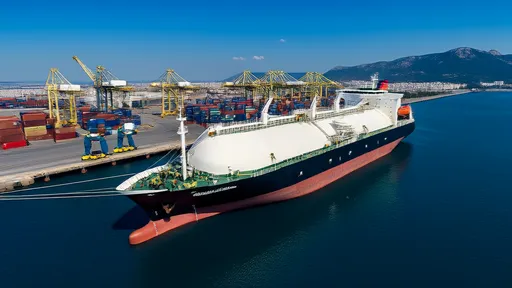
Greek shipping magnates are making waves in the maritime industry with a strategic pivot toward liquefied natural gas-powered cargo vessels, marking one of the most significant fleet modernization initiatives in recent maritime history. Against the backdrop of mounting environmental regulations and shifting global energy dynamics, Greece's legendary shipowners are deploying their characteristic long-term vision to future-proof their operations. This calculated transition represents more than mere compliance—it's a fundamental reimagining of maritime transportation that could redefine global shipping standards for decades to come.
Business

Qatar Energy and Total Sign $27 Billion LNG Project

By /Nov 5, 2025

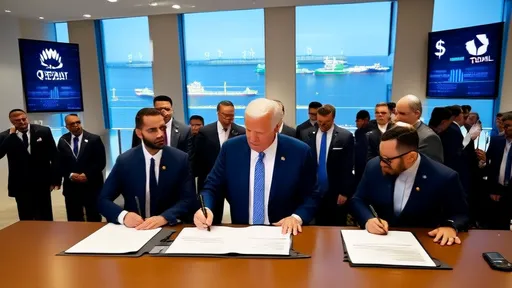
In a monumental move that reshapes global energy dynamics, QatarEnergy has sealed a historic $27 billion partnership with French energy giant TotalEnergies to develop the North Field East LNG project. The agreement, signed in Doha's glittering diplomatic quarter, represents the single largest investment in Qatar's liquefied natural gas history and signals a strategic shift in Europe's energy security landscape following geopolitical tensions that have disrupted traditional gas supplies.
Business

Czech Republic's Industrial Robot Density Leaps into the Global Top Five, Accelerating Automation Process

By /Nov 5, 2025

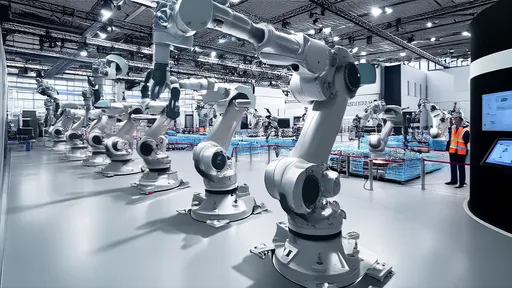
The clatter of machinery echoes through Czech factories with renewed intensity these days, but it's a sound less of human labor and more of automated precision. In a remarkable economic shift, the Czech Republic has catapulted itself into the global top five for industrial robot density, a metric that measures the number of robotic units per 10,000 human employees in the manufacturing sector. This isn't merely a statistical achievement; it's the culmination of a strategic, multi-faceted transformation that is fundamentally reshaping the nation's industrial landscape and its position in the global supply chain.
Business

Finnish Cleantech Companies Receive Key Support from EU Green Transition Fund

By /Nov 5, 2025

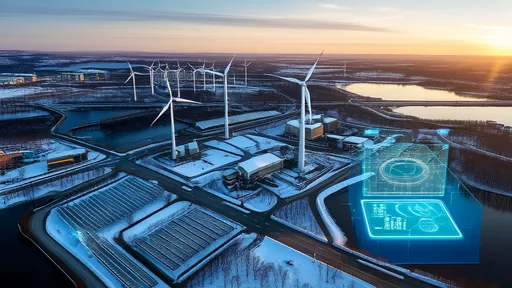
In a significant move towards accelerating Europe's green transition, Finnish clean technology companies have emerged as major beneficiaries of the European Union's substantial funding initiatives. The Nordic nation, long recognized for its environmental innovation, is positioning itself at the forefront of the continent's sustainable transformation, with its specialized enterprises securing pivotal financial backing from Brussels.
Business

Cambodia's Rice Exports Implement Brand Strategy, Prices Increase by 20%

By /Nov 5, 2025

In the lush, rain-fed paddies of Cambodia, a quiet revolution is taking root. For generations, Cambodian farmers have cultivated some of the world's most aromatic and sought-after rice varieties, yet the financial rewards have often failed to reflect this quality. Competing in a crowded global market primarily on price, the nation's rice sector found itself vulnerable to volatile commodity swings. This narrative, however, is undergoing a profound shift. The Cambodian government, in a strategic partnership with the private sector, has embarked on an ambitious national branding initiative. The early results are staggering: a concerted push towards premium positioning has led to an average price increase of twenty percent for its exported rice, signaling a new chapter for this cornerstone of the Cambodian economy.
Business

Myanmar Rubber Export Prices Soar Amid Global Supply Chain Adjustments

By /Nov 5, 2025

Myanmar's rubber industry is experiencing an unprecedented boom as export prices surge to record highs, riding the wave of global supply chain realignments that have reshaped international trade patterns. The Southeast Asian nation, long overshadowed by regional rubber giants, is suddenly finding itself at the center of global attention as manufacturers worldwide scramble to secure alternative rubber sources.
Business

Kazakhstan's Central Asia Financial Hub Accelerates, Attracting International Banks to Set Up Shop

By /Nov 5, 2025

Kazakhstan's ambitious vision to transform into Central Asia's premier financial hub is gaining remarkable momentum as international banking giants increasingly establish their presence in the country. The strategic initiative, years in the making, is now showing tangible results that signal a significant shift in the regional financial landscape.
Business

Morocco's Auto Parts Industry Rises to Become Europe's Second Largest Supplier

By /Nov 5, 2025

Morocco's automotive components industry has quietly transformed into Europe's second-largest supplier, marking one of the most remarkable industrial success stories of the past decade. What began as a modest manufacturing hub has evolved into a sophisticated ecosystem capable of competing with established European players. The North African kingdom now supplies major automotive brands across the continent, with its strategic positioning and competitive advantages creating an undeniable appeal for global manufacturers seeking reliable, cost-effective production partners.
Business

Kenya Leads Africa in Mobile Money Transactions, Exceeding $5 Billion Monthly

By /Nov 5, 2025

In the bustling markets of Nairobi, a quiet revolution has been unfolding for over a decade. Street vendors, taxi drivers, and small business owners conduct transactions not with crumpled banknotes, but with the tap of a mobile phone. Kenya has firmly established itself as Africa's undisputed leader in mobile money, with monthly transaction volumes consistently surpassing the $5 billion mark, creating an economic ecosystem that has become the envy of developing nations worldwide.
Business

Nigerian Digital Bank Kuda Secures $200 Million in New Funding Round

By /Nov 5, 2025

In a move that signals continued investor confidence in Africa's burgeoning fintech landscape, Nigerian digital bank Kuda has secured a monumental $200 million funding round that places the company among the continent's most valuable financial technology startups. The Series B investment, led by new backer Tiger Global Management with participation from existing investors, catapults Kuda's valuation to approximately $500 million just two years after its commercial launch, underscoring the rapid transformation occurring within Nigeria's financial services sector.
Business

New Zealand Dairy Exports Transform, High-Value Products Account for Over 60%

By /Nov 5, 2025

New Zealand's dairy industry, long synonymous with bulk commodity exports, is undergoing a profound transformation. The familiar image of milk powder being shipped in vast quantities is rapidly giving way to a more sophisticated narrative, one defined by innovation, specialized nutrition, and strategic market positioning. The most telling indicator of this shift is the sector's pivot towards high-value products, which now constitute over 60% of its export earnings. This is not a minor adjustment but a fundamental reimagining of New Zealand's role in the global food chain, moving from a volume-based supplier to a value-driven partner in health and wellness.
Business

Ethiopian Industrial Parks Attract Large-Scale Transfer of Chinese Textile Enterprises

By /Nov 5, 2025

Ethiopia's industrial parks are quietly emerging as the new frontier for global textile manufacturing, with Chinese companies leading a remarkable wave of investment that could reshape Africa's economic landscape. The transformation is happening at a pace that has surprised even the most seasoned industry observers, creating what many are calling the most significant shift in global textile production since China's own manufacturing boom decades ago.
Business

Belarusian Potash Fertilizer Exports Shift to Asian Markets, Exports to India Increase by 50%

By /Nov 5, 2025

Belarusian Potash Company has dramatically shifted its export strategy in recent months, redirecting massive shipments toward Asian markets as traditional European customers dwindle. The geopolitical reconfiguration of global fertilizer trade routes represents one of the most significant commodity flow transformations since the implementation of Western sanctions against Belarus. Industry analysts confirm that India has emerged as the primary beneficiary of this strategic pivot, with imports of Belarusian potash surging by approximately 50% during the last quarter alone.
Business

Swedish Battery Manufacturer Northvolt Completes Europe's Largest Battery Factory

By /Nov 5, 2025

In the quiet Swedish town of Skellefteå, just 200 kilometers south of the Arctic Circle, a quiet revolution is taking place that could reshape Europe's industrial future. Northvolt, the continent's most ambitious battery startup, has officially inaugurated what industry analysts are calling Europe's largest battery factory—a sprawling complex that represents not just a manufacturing facility, but a statement of intent in the global race for clean energy technology.
Business

Peru's Blueberry Exports Surpass Grapes to Become the Top Fruit Export Category

By /Nov 5, 2025

Peru's agricultural landscape has witnessed a remarkable shift in recent years, with blueberries emerging as the country's leading fruit export, surpassing the long-dominant grape sector. This development marks a significant milestone in Peru's economic transformation and highlights the nation's growing influence in global fruit markets.
Business

UAE Sovereign Wealth Fund Increases Technology Investment in the Asia-Pacific Region

By /Nov 5, 2025

The Abu Dhabi Investment Authority, one of the world's largest sovereign wealth funds, is quietly executing a strategic pivot toward Asia-Pacific technology sectors that could reshape global investment patterns for years to come. With over $800 billion in assets under management, ADIA's recent moves signal a fundamental reallocation of capital that reflects both changing global economic dynamics and the fund's long-term vision for technological transformation.
Business

Oman's Duqm Special Economic Zone Welcomes First Batch of Chinese Enterprises

By /Nov 5, 2025

The winds of economic transformation are sweeping across the Omani desert as the Duqm Special Economic Zone (SEZ) marks a significant milestone with the arrival of its first wave of Chinese corporate pioneers. This development, far from being a mere transactional entry, represents the tangible fruition of years of strategic planning and high-level diplomacy between the Sultanate of Oman and the People's Republic of China, firmly anchoring Duqm's position within the ambitious framework of the Belt and Road Initiative (BRI).
Business

Sri Lankan Tea Exports Reach New High, Targeting China's High-End Market

By /Nov 5, 2025

Sri Lanka's tea industry is experiencing a remarkable renaissance, with export figures reaching unprecedented heights as the island nation strategically pivots toward China's burgeoning premium market. The aromatic Ceylon tea, long celebrated for its distinctive character and quality, is now finding enthusiastic reception among China's growing middle and upper classes who increasingly value authenticity, provenance, and premium experiences.