Myanmar Rubber Export Prices Soar Amid Global Supply Chain Adjustments

Nov 5, 2025 By

Myanmar's rubber industry is experiencing an unprecedented boom as export prices surge to record highs, riding the wave of global supply chain realignments that have reshaped international trade patterns. The Southeast Asian nation, long overshadowed by regional rubber giants, is suddenly finding itself at the center of global attention as manufacturers worldwide scramble to secure alternative rubber sources.


The transformation began subtly but gained momentum through 2023, with Myanmar's rubber exports reaching $450 million in the first half of 2024 alone, representing a 67% increase compared to the same period last year. Industry veterans who have weathered decades of market fluctuations say they've never witnessed such dramatic price movements. "We're seeing prices that would have been unimaginable just two years ago," says U Aung Kyaw, a third-generation rubber plantation owner from the Mon State. "The global situation has completely changed the game for us."


Global supply chain disruptions have been the primary catalyst for this dramatic shift. Traditional rubber powerhouses like Thailand and Vietnam have faced production challenges ranging from climate issues to labor shortages, creating supply gaps that Myanmar has been perfectly positioned to fill. The country's strategic location, combined with its relatively untapped production capacity, has made it an attractive alternative for international buyers seeking stability in an increasingly volatile market.


European and North American manufacturers, in particular, have been driving the demand surge. Automotive industry suppliers, facing pressure to diversify their sourcing away from traditional supply chains, have discovered Myanmar's rubber meets their stringent quality standards while offering competitive pricing. "The quality of Myanmar's rubber has improved significantly over the past decade," notes Dr. Sarah Chen, a commodities analyst with Global Trade Insights. "Combine that with current market conditions, and you have the perfect storm for price appreciation."


The timing couldn't be more fortuitous for Myanmar's agricultural sector. Many plantation owners had been struggling with rising production costs and aging infrastructure before this boom. Now, the influx of foreign currency is enabling much-needed investments in processing facilities and sustainable farming practices. "This is our opportunity to modernize," explains Daw Khin Mar, who manages a 200-acre plantation in the Bago Region. "We're reinvesting our profits into better equipment and training for our workers."


International trade patterns tell a compelling story of this transformation. Myanmar's rubber exports to China have grown by 85% year-over-year, while shipments to European markets have more than doubled. The diversification of export destinations has provided additional stability to the sector, reducing its historical dependence on any single market. Trade officials report that new agreements are being negotiated with several countries that previously had minimal rubber trade with Myanmar.


The human impact of this boom is equally significant. In rubber-producing regions across Myanmar, local economies are experiencing a renaissance. Workers who had migrated to urban centers for better opportunities are returning to their hometowns, drawn by competitive wages in the revitalized rubber industry. "I came back from Yangon because the money is better here now, and I can be with my family," says Ko Zaw, a tapper who recently returned to his village after five years working in construction.


However, this rapid growth brings its own set of challenges. Environmental groups have raised concerns about potential deforestation as farmers seek to expand cultivation areas to capitalize on high prices. The government has responded by implementing stricter land-use regulations and promoting sustainable expansion practices. "We must balance economic opportunity with environmental responsibility," emphasizes U Tin Htut, director of the Ministry of Agriculture's rubber development program.


Infrastructure limitations also pose significant hurdles. Myanmar's transportation and port facilities, while improving, still struggle to handle the increased volume of exports efficiently. Shipping delays and logistical bottlenecks occasionally threaten to undermine the country's competitive advantage. "The infrastructure needs to catch up with the demand," observes a European importer who requested anonymity. "But everyone understands this takes time."


The global context of this boom cannot be overstated. As multinational corporations continue to implement "China Plus" sourcing strategies and diversify their supply chains across Southeast Asia, Myanmar stands to benefit significantly. The country's relatively low production costs and improving political stability make it an increasingly attractive investment destination for rubber processing and manufacturing.


Looking ahead, industry experts believe the current price levels may stabilize but are unlikely to return to pre-boom levels. Structural changes in global supply chains suggest that Myanmar has permanently elevated its position in the international rubber market. "This isn't just a temporary spike," asserts Michael Roberts, senior analyst at the International Rubber Study Group. "Myanmar has established itself as a reliable supplier in a reconfigured global market."


For Myanmar's rubber farmers and exporters, the future appears bright but requires careful navigation. The lessons from other commodity booms suggest that sustainable growth depends on continued quality improvement, market diversification, and responsible environmental practices. As the world continues to recalibrate its supply chains, Myanmar's rubber industry finds itself in the enviable position of having strong demand and rising prices – a combination that could transform the nation's agricultural landscape for generations to come.


The remarkable story of Myanmar's rubber boom serves as a powerful case study in how global economic shifts can create unexpected opportunities for emerging markets. While challenges remain, the sector's current trajectory suggests that Myanmar is well-positioned to capitalize on its newfound advantage in the global rubber trade, potentially establishing itself as a permanent fixture in the international supply chain.


Recommend Posts
Business

Ukraine's Agricultural Technology Develops Rapidly, Precision Agriculture Technology Popularity Increases

By /Nov 5, 2025

Ukraine's agricultural landscape is undergoing a profound transformation, marked by the rapid adoption of precision farming technologies. This evolution is not merely a trend but a necessary pivot, driven by the dual pressures of global food demand and the need for sustainable resource management. The country's vast, fertile plains, historically known as the breadbasket of Europe, are now becoming a testing ground for some of the most advanced agricultural technologies in the world.
Business

Greek Shipping Industry Embraces Green Transition with Orders for Multiple LNG-Powered Cargo Ships

By /Nov 5, 2025

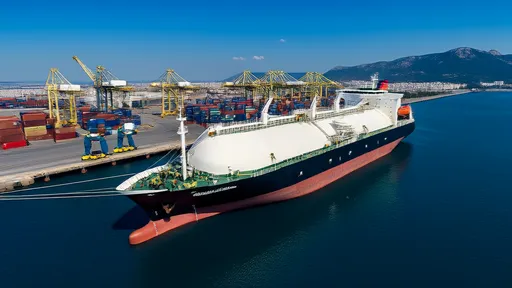
Greek shipping magnates are making waves in the maritime industry with a strategic pivot toward liquefied natural gas-powered cargo vessels, marking one of the most significant fleet modernization initiatives in recent maritime history. Against the backdrop of mounting environmental regulations and shifting global energy dynamics, Greece's legendary shipowners are deploying their characteristic long-term vision to future-proof their operations. This calculated transition represents more than mere compliance—it's a fundamental reimagining of maritime transportation that could redefine global shipping standards for decades to come.
Business

Qatar Energy and Total Sign $27 Billion LNG Project

By /Nov 5, 2025

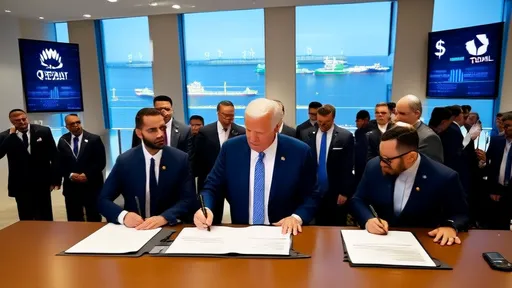
In a monumental move that reshapes global energy dynamics, QatarEnergy has sealed a historic $27 billion partnership with French energy giant TotalEnergies to develop the North Field East LNG project. The agreement, signed in Doha's glittering diplomatic quarter, represents the single largest investment in Qatar's liquefied natural gas history and signals a strategic shift in Europe's energy security landscape following geopolitical tensions that have disrupted traditional gas supplies.
Business

Czech Republic's Industrial Robot Density Leaps into the Global Top Five, Accelerating Automation Process

By /Nov 5, 2025

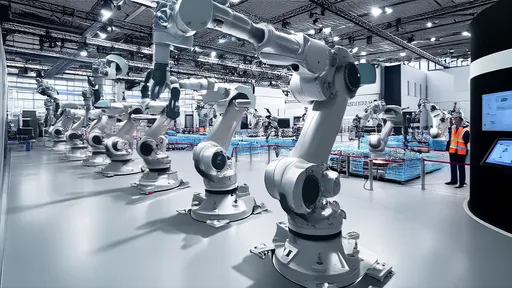
The clatter of machinery echoes through Czech factories with renewed intensity these days, but it's a sound less of human labor and more of automated precision. In a remarkable economic shift, the Czech Republic has catapulted itself into the global top five for industrial robot density, a metric that measures the number of robotic units per 10,000 human employees in the manufacturing sector. This isn't merely a statistical achievement; it's the culmination of a strategic, multi-faceted transformation that is fundamentally reshaping the nation's industrial landscape and its position in the global supply chain.
Business

Finnish Cleantech Companies Receive Key Support from EU Green Transition Fund

By /Nov 5, 2025

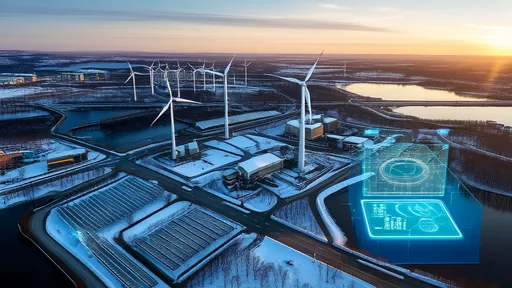
In a significant move towards accelerating Europe's green transition, Finnish clean technology companies have emerged as major beneficiaries of the European Union's substantial funding initiatives. The Nordic nation, long recognized for its environmental innovation, is positioning itself at the forefront of the continent's sustainable transformation, with its specialized enterprises securing pivotal financial backing from Brussels.
Business

Cambodia's Rice Exports Implement Brand Strategy, Prices Increase by 20%

By /Nov 5, 2025

In the lush, rain-fed paddies of Cambodia, a quiet revolution is taking root. For generations, Cambodian farmers have cultivated some of the world's most aromatic and sought-after rice varieties, yet the financial rewards have often failed to reflect this quality. Competing in a crowded global market primarily on price, the nation's rice sector found itself vulnerable to volatile commodity swings. This narrative, however, is undergoing a profound shift. The Cambodian government, in a strategic partnership with the private sector, has embarked on an ambitious national branding initiative. The early results are staggering: a concerted push towards premium positioning has led to an average price increase of twenty percent for its exported rice, signaling a new chapter for this cornerstone of the Cambodian economy.
Business

Myanmar Rubber Export Prices Soar Amid Global Supply Chain Adjustments

By /Nov 5, 2025

Myanmar's rubber industry is experiencing an unprecedented boom as export prices surge to record highs, riding the wave of global supply chain realignments that have reshaped international trade patterns. The Southeast Asian nation, long overshadowed by regional rubber giants, is suddenly finding itself at the center of global attention as manufacturers worldwide scramble to secure alternative rubber sources.
Business

Kazakhstan's Central Asia Financial Hub Accelerates, Attracting International Banks to Set Up Shop

By /Nov 5, 2025

Kazakhstan's ambitious vision to transform into Central Asia's premier financial hub is gaining remarkable momentum as international banking giants increasingly establish their presence in the country. The strategic initiative, years in the making, is now showing tangible results that signal a significant shift in the regional financial landscape.
Business

Morocco's Auto Parts Industry Rises to Become Europe's Second Largest Supplier

By /Nov 5, 2025

Morocco's automotive components industry has quietly transformed into Europe's second-largest supplier, marking one of the most remarkable industrial success stories of the past decade. What began as a modest manufacturing hub has evolved into a sophisticated ecosystem capable of competing with established European players. The North African kingdom now supplies major automotive brands across the continent, with its strategic positioning and competitive advantages creating an undeniable appeal for global manufacturers seeking reliable, cost-effective production partners.
Business

Kenya Leads Africa in Mobile Money Transactions, Exceeding $5 Billion Monthly

By /Nov 5, 2025

In the bustling markets of Nairobi, a quiet revolution has been unfolding for over a decade. Street vendors, taxi drivers, and small business owners conduct transactions not with crumpled banknotes, but with the tap of a mobile phone. Kenya has firmly established itself as Africa's undisputed leader in mobile money, with monthly transaction volumes consistently surpassing the $5 billion mark, creating an economic ecosystem that has become the envy of developing nations worldwide.
Business

Nigerian Digital Bank Kuda Secures $200 Million in New Funding Round

By /Nov 5, 2025

In a move that signals continued investor confidence in Africa's burgeoning fintech landscape, Nigerian digital bank Kuda has secured a monumental $200 million funding round that places the company among the continent's most valuable financial technology startups. The Series B investment, led by new backer Tiger Global Management with participation from existing investors, catapults Kuda's valuation to approximately $500 million just two years after its commercial launch, underscoring the rapid transformation occurring within Nigeria's financial services sector.
Business

New Zealand Dairy Exports Transform, High-Value Products Account for Over 60%

By /Nov 5, 2025

New Zealand's dairy industry, long synonymous with bulk commodity exports, is undergoing a profound transformation. The familiar image of milk powder being shipped in vast quantities is rapidly giving way to a more sophisticated narrative, one defined by innovation, specialized nutrition, and strategic market positioning. The most telling indicator of this shift is the sector's pivot towards high-value products, which now constitute over 60% of its export earnings. This is not a minor adjustment but a fundamental reimagining of New Zealand's role in the global food chain, moving from a volume-based supplier to a value-driven partner in health and wellness.
Business

Ethiopian Industrial Parks Attract Large-Scale Transfer of Chinese Textile Enterprises

By /Nov 5, 2025

Ethiopia's industrial parks are quietly emerging as the new frontier for global textile manufacturing, with Chinese companies leading a remarkable wave of investment that could reshape Africa's economic landscape. The transformation is happening at a pace that has surprised even the most seasoned industry observers, creating what many are calling the most significant shift in global textile production since China's own manufacturing boom decades ago.
Business

Belarusian Potash Fertilizer Exports Shift to Asian Markets, Exports to India Increase by 50%

By /Nov 5, 2025

Belarusian Potash Company has dramatically shifted its export strategy in recent months, redirecting massive shipments toward Asian markets as traditional European customers dwindle. The geopolitical reconfiguration of global fertilizer trade routes represents one of the most significant commodity flow transformations since the implementation of Western sanctions against Belarus. Industry analysts confirm that India has emerged as the primary beneficiary of this strategic pivot, with imports of Belarusian potash surging by approximately 50% during the last quarter alone.
Business

Swedish Battery Manufacturer Northvolt Completes Europe's Largest Battery Factory

By /Nov 5, 2025

In the quiet Swedish town of Skellefteå, just 200 kilometers south of the Arctic Circle, a quiet revolution is taking place that could reshape Europe's industrial future. Northvolt, the continent's most ambitious battery startup, has officially inaugurated what industry analysts are calling Europe's largest battery factory—a sprawling complex that represents not just a manufacturing facility, but a statement of intent in the global race for clean energy technology.
Business

Peru's Blueberry Exports Surpass Grapes to Become the Top Fruit Export Category

By /Nov 5, 2025

Peru's agricultural landscape has witnessed a remarkable shift in recent years, with blueberries emerging as the country's leading fruit export, surpassing the long-dominant grape sector. This development marks a significant milestone in Peru's economic transformation and highlights the nation's growing influence in global fruit markets.
Business

UAE Sovereign Wealth Fund Increases Technology Investment in the Asia-Pacific Region

By /Nov 5, 2025

The Abu Dhabi Investment Authority, one of the world's largest sovereign wealth funds, is quietly executing a strategic pivot toward Asia-Pacific technology sectors that could reshape global investment patterns for years to come. With over $800 billion in assets under management, ADIA's recent moves signal a fundamental reallocation of capital that reflects both changing global economic dynamics and the fund's long-term vision for technological transformation.
Business

Oman's Duqm Special Economic Zone Welcomes First Batch of Chinese Enterprises

By /Nov 5, 2025

The winds of economic transformation are sweeping across the Omani desert as the Duqm Special Economic Zone (SEZ) marks a significant milestone with the arrival of its first wave of Chinese corporate pioneers. This development, far from being a mere transactional entry, represents the tangible fruition of years of strategic planning and high-level diplomacy between the Sultanate of Oman and the People's Republic of China, firmly anchoring Duqm's position within the ambitious framework of the Belt and Road Initiative (BRI).
Business

Sri Lankan Tea Exports Reach New High, Targeting China's High-End Market

By /Nov 5, 2025

Sri Lanka's tea industry is experiencing a remarkable renaissance, with export figures reaching unprecedented heights as the island nation strategically pivots toward China's burgeoning premium market. The aromatic Ceylon tea, long celebrated for its distinctive character and quality, is now finding enthusiastic reception among China's growing middle and upper classes who increasingly value authenticity, provenance, and premium experiences.