Peru's agricultural landscape has witnessed a remarkable shift in recent years, with blueberries emerging as the country's leading fruit export, surpassing the long-dominant grape sector. This development marks a significant milestone in Peru's economic transformation and highlights the nation's growing influence in global fruit markets.
The rise of Peruvian blueberries represents one of the most dramatic success stories in modern agriculture. From virtually nonexistent commercial production just over a decade ago, Peru has rapidly ascended to become the world's second-largest blueberry exporter, trailing only Chile in global shipments. The speed of this transformation has astonished industry observers and competitors alike, demonstrating what strategic planning, favorable growing conditions, and targeted investment can achieve in a relatively short timeframe.
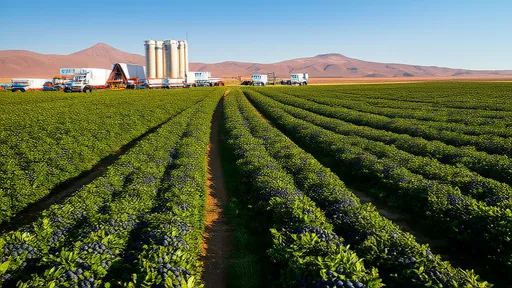
Several factors have converged to propel blueberries to their current preeminent position. Peru's unique geography provides ideal growing conditions, with coastal valleys offering the perfect combination of climate, soil, and water access. The country's position in the Southern Hemisphere allows for counter-seasonal production, enabling Peruvian growers to supply Northern Hemisphere markets during winter months when local production is unavailable. This strategic timing has proven crucial in capturing premium market positions and establishing reliable supply chains.
The blueberry boom didn't happen by accident. Substantial private investment in research, infrastructure, and cultivation techniques laid the foundation for rapid expansion. Peruvian growers demonstrated remarkable foresight in adopting new blueberry varieties specifically bred for their growing conditions, particularly the highly productive Biloxi and Ventura cultivars. These varieties not only thrived in Peru's climate but also produced berries with excellent shelf life and shipping qualities essential for export markets.
Government support played a crucial role in facilitating this agricultural revolution. While not directly driving the blueberry expansion, policies promoting agricultural exports and infrastructure development created an environment where private enterprise could flourish. Investment in irrigation projects, particularly in previously arid coastal regions, transformed landscapes and enabled high-value crop cultivation. The development of modern port facilities and cold chain infrastructure ensured that delicate berries could reach international markets in optimal condition.
The timing of Peru's blueberry emergence coincided perfectly with growing global demand for superfruits and healthy eating trends. Consumers worldwide became increasingly aware of blueberries' nutritional benefits, including high antioxidant content and potential health advantages. This demand surge created premium pricing opportunities that made blueberry cultivation particularly attractive to Peruvian growers looking to maximize returns from their agricultural investments.
Meanwhile, Peru's grape sector, while still robust and valuable, has faced increasing challenges that contributed to blueberries overtaking its position. Grapes remain an important export commodity, but intensifying international competition and market saturation in some segments have limited growth potential. Climate variations and water management issues have also posed challenges for some grape-growing regions, while blueberries have proven more adaptable to Peru's diverse growing conditions.
The economic impact of the blueberry surge has been substantial across Peruvian agricultural communities. Employment opportunities have multiplied in rural areas, with blueberry farms requiring significant labor for harvesting and processing operations. The industry has particularly benefited women, who comprise the majority of the harvesting workforce and have gained economic independence through stable employment. This social dimension adds another layer of significance to the blueberry success story beyond mere export statistics.
Export markets have responded enthusiastically to Peruvian blueberries. The United States remains the largest destination, accounting for nearly half of all shipments, followed by European markets including the Netherlands, United Kingdom, and China, which has emerged as a rapidly growing market for premium berries. The diversity of export destinations has helped insulate Peruvian growers from market-specific disruptions and price fluctuations.
Looking forward, the Peruvian blueberry industry shows no signs of slowing its expansion. Ongoing research and development efforts continue to yield new varieties with improved characteristics, while growers constantly refine their cultivation practices to enhance yield and quality. The industry's commitment to sustainable farming practices and certification programs positions Peruvian blueberries favorably in markets increasingly concerned with environmental and social responsibility.
The challenge now shifts from rapid expansion to sustainable growth. Maintaining quality standards while increasing production volume requires careful management and continued investment in technology and training. Market development efforts must keep pace with production growth to ensure that expanding supplies find receptive markets at profitable price levels. The industry must also navigate evolving regulatory requirements and phytosanitary standards in key export markets.
Peru's experience with blueberries offers valuable lessons for other agricultural sectors and developing nations seeking to establish positions in global value chains. The combination of strategic crop selection, adaptation of technology to local conditions, alignment with market trends, and supportive infrastructure development provides a blueprint for agricultural transformation. The success demonstrates how countries can leverage their natural advantages to create competitive positions in global markets.
As blueberries consolidate their position as Peru's leading fruit export, the industry faces both opportunities and challenges. Climate change presents uncertainties that require adaptive strategies, while continuing to meet consumer expectations for quality, safety, and sustainability will demand ongoing innovation. However, the remarkable trajectory of Peruvian blueberries suggests that the industry possesses the dynamism and resilience to navigate these challenges successfully.
The blueberry story represents more than just an export statistic—it symbolizes Peru's capacity for economic transformation and its growing sophistication in global agricultural markets. As other nations watch Peru's continued ascent in the blueberry sector, they witness a masterclass in how to identify opportunity, mobilize resources, and execute with precision in competitive international markets.
By /Nov 5, 2025

By /Nov 5, 2025

By /Nov 5, 2025

By /Nov 5, 2025

By /Nov 5, 2025
By /Nov 5, 2025

By /Nov 5, 2025

By /Nov 5, 2025

By /Nov 5, 2025

By /Nov 5, 2025

By /Nov 5, 2025
By /Nov 5, 2025
By /Nov 5, 2025
By /Nov 5, 2025

By /Nov 5, 2025
By /Nov 5, 2025

By /Nov 5, 2025
By /Nov 5, 2025
By /Nov 5, 2025