The Abu Dhabi Investment Authority, one of the world's largest sovereign wealth funds, is quietly executing a strategic pivot toward Asia-Pacific technology sectors that could reshape global investment patterns for years to come. With over $800 billion in assets under management, ADIA's recent moves signal a fundamental reallocation of capital that reflects both changing global economic dynamics and the fund's long-term vision for technological transformation.
Senior investment executives at the fund have been establishing new partnerships and expanding existing relationships with technology firms across Singapore, South Korea, and emerging innovation hubs in Southeast Asia. This strategic shift comes as Middle Eastern sovereign wealth funds collectively manage approximately $4 trillion in assets, representing a formidable force in global capital markets. ADIA's particular focus on Asia's technology ecosystem marks a significant departure from its historical concentration on Western markets and traditional asset classes.
The reallocation strategy appears to be driven by multiple converging factors, including the relative maturity of Western technology markets, geopolitical recalibrations, and the explosive growth potential of Asia's digital economies. Fund managers have been observed conducting extensive due diligence on companies specializing in artificial intelligence, fintech, and green technology - sectors where Asian innovators are increasingly challenging Silicon Valley's dominance.
Investment analysts tracking ADIA's portfolio movements note that the fund has been gradually increasing its exposure to Asian technology ventures since 2020, but the pace has accelerated dramatically in recent months. The fund's Singapore office has expanded its technology investment team by nearly forty percent, while establishing new satellite operations in Seoul and Jakarta to better identify and cultivate promising investment opportunities.
What distinguishes ADIA's approach from other sovereign wealth funds is its preference for direct investments and strategic partnerships rather than passive index tracking or fund-of-funds arrangements. This hands-on methodology allows the Abu Dhabi fund to exert greater influence over its portfolio companies while securing preferential access to emerging technologies and business models.
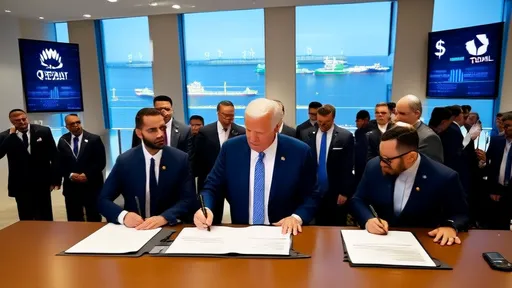
The fund's recent participation in a $500 million funding round for a Singapore-based artificial intelligence startup specializing in supply chain optimization demonstrates this strategic orientation. Industry insiders familiar with the transaction revealed that ADIA negotiated not only for substantial equity but also for technology transfer rights and regional licensing agreements that could benefit the UAE's domestic technology sector.
Simultaneously, ADIA has been building positions in established Asian technology giants, particularly in semiconductor manufacturing and electric vehicle production. The fund's growing stake in South Korea's leading chipmaker represents a strategic bet on the continued centrality of Asian semiconductor expertise to the global technology ecosystem, despite increasing geopolitical tensions and supply chain fragmentation.
Financial industry professionals who have collaborated with ADIA describe the fund's investment committee as remarkably sophisticated in its understanding of technological trends and their commercial implications. Unlike many institutional investors who rely heavily on external consultants, ADIA has cultivated deep internal expertise in evaluating complex technology businesses and their long-term viability.
This technological focus aligns with broader economic diversification efforts within the United Arab Emirates itself. As the Gulf nation seeks to reduce its dependence on hydrocarbon revenues, transferring technological knowledge and business expertise through strategic investments has become an explicit objective of the sovereign wealth fund's mandate.
The timing of ADIA's Asia-Pacific push coincides with increasing scrutiny of Chinese technology investments by Western regulators, creating opportunities for well-capitalized Middle Eastern funds to fill the funding gap. While ADIA maintains investments in Chinese technology companies, its recent activities suggest a deliberate diversification across multiple Asian markets rather than concentration in any single jurisdiction.
Investment bankers working on technology transactions in Southeast Asia report that ADIA representatives have been particularly active in evaluating later-stage startups preparing for public listings. The fund appears to be positioning itself to capture value from the anticipated wave of technology IPOs across Asian exchanges, while simultaneously securing strategic partnerships that could facilitate the adoption of these technologies in Middle Eastern markets.
ADIA's evolving investment strategy reflects a broader recognition that technological innovation and economic growth dynamics are shifting eastward. The fund's leadership seems to have concluded that maintaining its historical allocation to Western markets would mean missing the most dynamic segments of the global technology landscape.
The sovereign wealth fund's move into Asian technology also represents a hedge against potential stagnation in more mature innovation ecosystems. With venture capital funding declining in Silicon Valley and European technology hubs facing structural challenges, Asia's combination of engineering talent, manufacturing capability, and growing consumer markets presents a compelling investment thesis.
Industry observers note that ADIA's approach combines financial discipline with strategic foresight. The fund typically avoids speculative early-stage investments, preferring companies with proven business models and clear paths to profitability. This selective methodology has served the fund well in previous sector allocations and appears to be guiding its technology investments in Asia.
As ADIA continues to deploy capital into Asia's technology sector, the implications extend beyond financial markets. The fund's investments facilitate knowledge transfer, create cross-border business opportunities, and potentially reshape global technology supply chains. The long-term strategic nature of these investments means their full impact may not be apparent for years, but the direction of travel is unmistakable.
The Abu Dhabi fund's systematic build-up of technology exposure in Asia comes as other Middle Eastern sovereign investors, including Saudi Arabia's Public Investment Fund and Qatar Investment Authority, are pursuing similar strategies. This collective pivot suggests a structural reallocation of capital that could permanently alter the global technology investment landscape.
Financial analysts project that Middle Eastern sovereign wealth funds could deploy upwards of $50 billion into Asian technology ventures over the next five years, with ADIA positioned as a leading participant in this capital migration. The scale of this potential investment underscores the growing importance of Asian innovation to global wealth funds seeking sustainable long-term returns.
While ADIA maintains its characteristic discretion regarding specific investment targets and allocation percentages, the fund's strategic orientation toward Asian technology has become increasingly visible through its transaction activity and organizational expansion. This measured but determined approach reflects the fund's reputation for sophisticated long-term thinking and calculated risk-taking.
As technological innovation continues to drive economic transformation globally, ADIA's strategic pivot toward Asia's technology ecosystem represents both a pragmatic response to shifting global dynamics and a visionary bet on the future geography of innovation. The success or failure of this strategic reorientation will likely influence sovereign investment patterns for decades to come.

By /Nov 5, 2025

By /Nov 5, 2025
By /Nov 5, 2025

By /Nov 5, 2025

By /Nov 5, 2025

By /Nov 5, 2025

By /Nov 5, 2025

By /Nov 5, 2025

By /Nov 5, 2025

By /Nov 5, 2025

By /Nov 5, 2025

By /Nov 5, 2025
By /Nov 5, 2025

By /Nov 5, 2025

By /Nov 5, 2025

By /Nov 5, 2025

By /Nov 5, 2025

By /Nov 5, 2025

By /Nov 5, 2025